 BIM Services
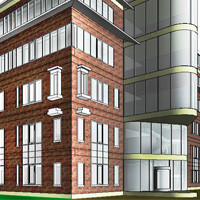 Architectural
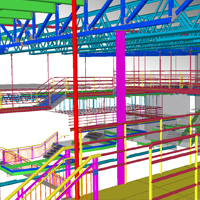 Structural
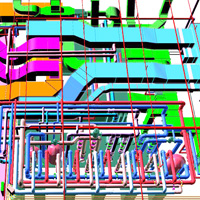 MEP
MEP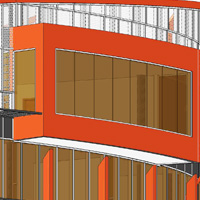 Facade
 Industrial
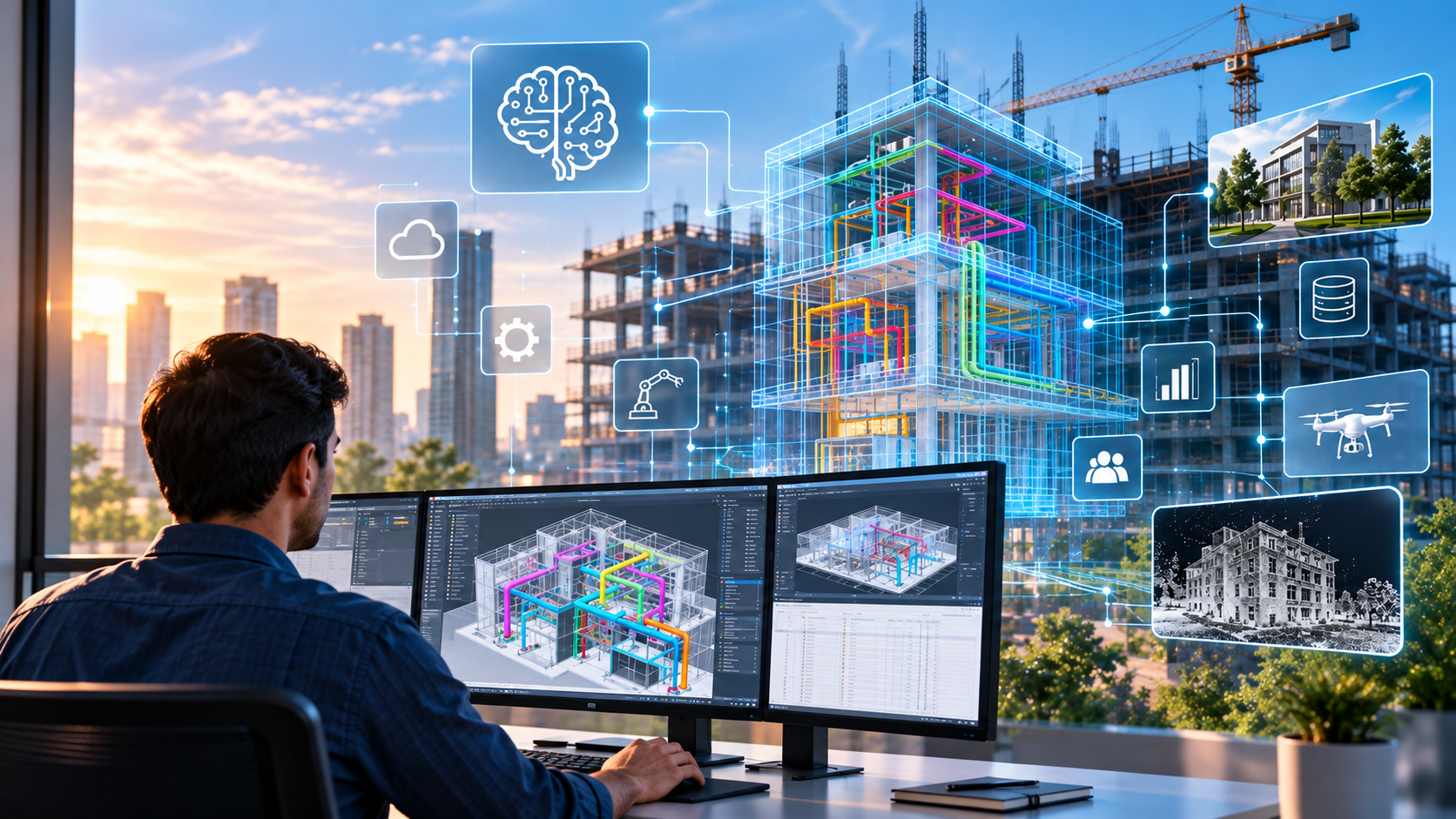
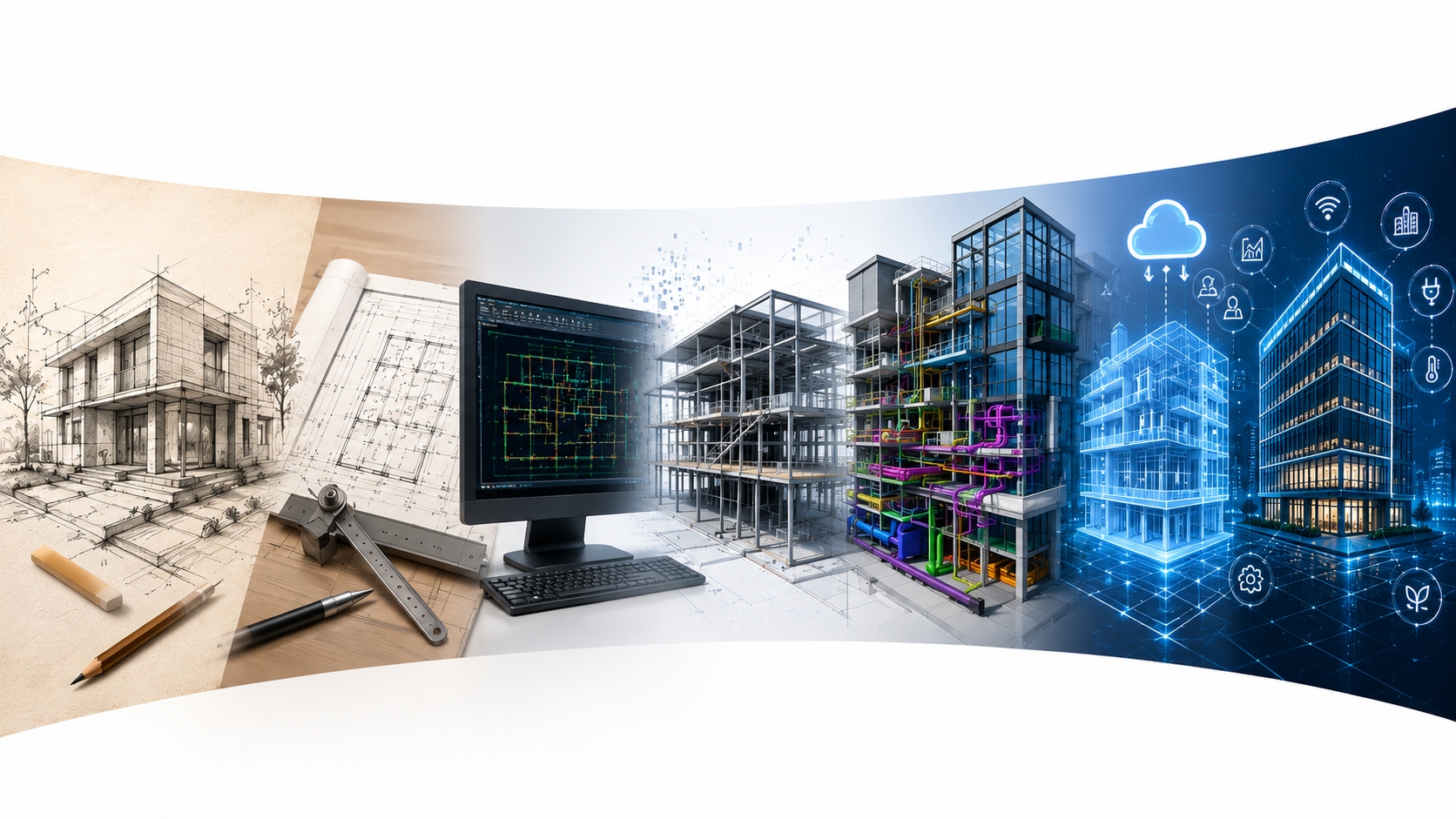
Building Information Modeling has changed the way architecture, engineering, and construction teams design, coordinate, document, and deliver projects. Today, another shift is taking place as Artificial Intelligence becomes more closely connected with BIM workflows.
For years, BIM teams have used automation, scripts, parametric tools, and standardized workflows to reduce repetitive work. AI extends these capabilities by helping teams work with large amounts of project information, identify patterns, review data, and find issues that require attention.
The change is not about replacing BIM engineers or designers. Construction projects still require technical knowledge, engineering judgment, constructability experience, and detailed quality control. Instead, AI is becoming another tool that can support professionals as projects become larger and more information-intensive.
Here are some of the developments likely to influence AI-powered BIM in 2026 and the years ahead.
1. BIM Automation Is Becoming More Intelligent
Automation has been part of BIM delivery for a long time. Teams use scripts and predefined rules for model creation, parameter management, documentation, schedules, and quality checks.
The difference with AI is the ability to work with context rather than relying entirely on fixed instructions.
Consider a large multidisciplinary model containing thousands of elements. A traditional automated check might identify elements that do not meet a predefined rule. More advanced systems could also help identify unusual patterns, group related issues, or direct the BIM team toward areas that need closer review. This can reduce time spent on routine tasks while allowing BIM professionals to concentrate on coordination and technical decisions.
2. AI-Assisted BIM Quality Control
BIM quality depends on much more than the visual appearance of a 3D model. Element information, naming conventions, parameters, model organization, Levels of Development, drawing consistency, and project-specific requirements all need to be checked before information moves further into the construction process.
On large projects, performing every check manually can be time-consuming. Automation already helps BIM teams validate many of these requirements. AI-supported analysis can take this further by helping identify inconsistencies and conditions that may otherwise require extensive manual review.
The practical benefit is earlier detection. Finding incomplete information during model development is far less disruptive than discovering the same problem while preparing shop drawings or during construction.Human QA/QC, however, remains essential. Automated checks can identify potential problems, but experienced professionals still need to determine whether something is technically correct and appropriate for the project.
3. Smarter Clash Detection and BIM Coordination
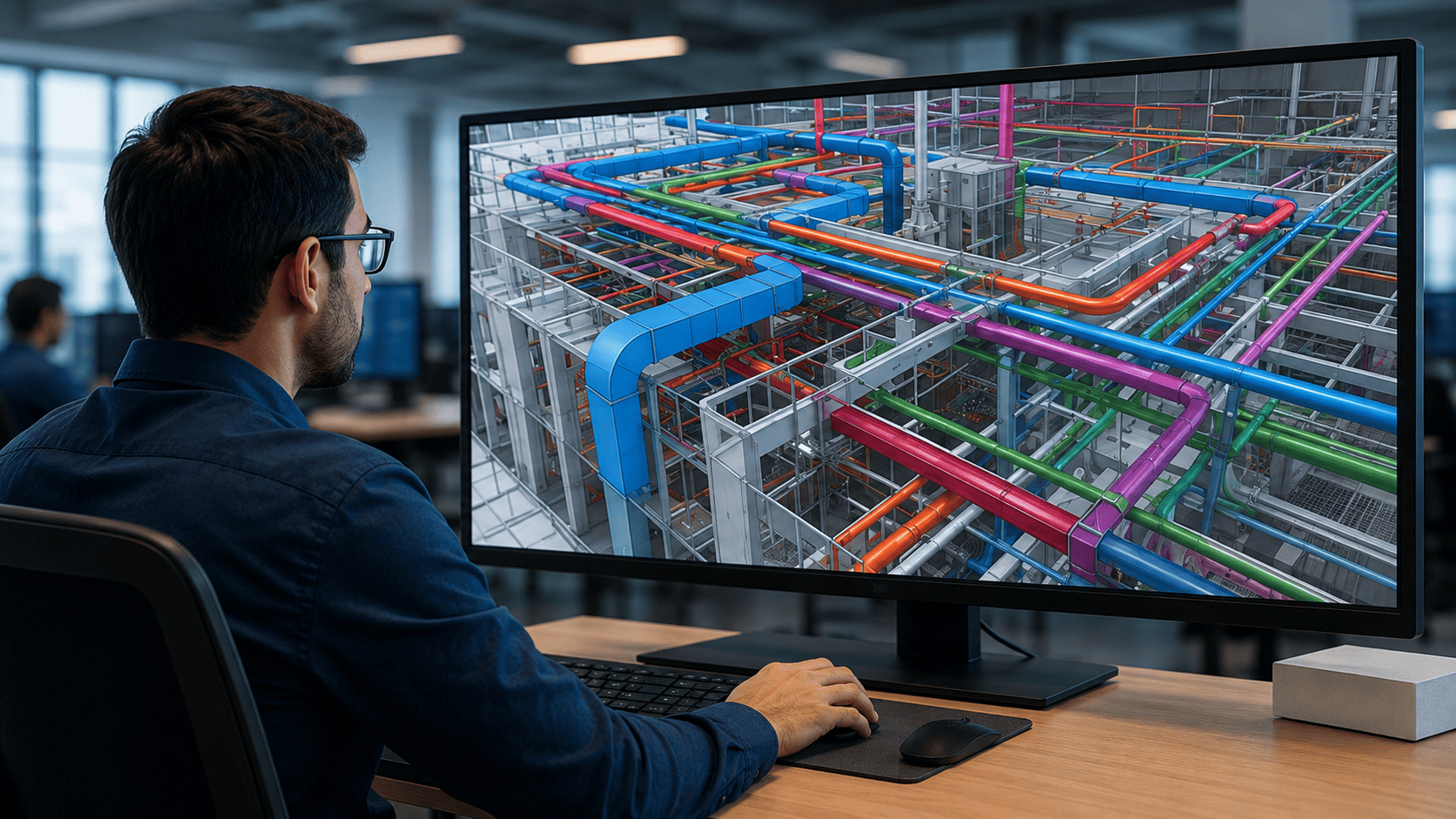
Clash detection has become a standard part of multidisciplinary BIM coordination. But detecting clashes is only the beginning. A complex building can generate hundreds or thousands of coordination issues between architectural, structural, HVAC, plumbing, electrical, fire protection, and other systems. Not every clash has the same importance. Some may affect installation or access. Others may be minor modeling issues. Several clashes may also originate from a single coordination problem.
AI-supported coordination tools have the potential to help classify issues, recognize recurring conflicts, prioritize areas requiring attention, and track changes between model versions. Instead of BIM coordinators spending significant time sorting through large clash reports, technology can assist them in focusing on the issues most likely to affect construction.
4. From Coordination Models to Fabrication-Ready BIM
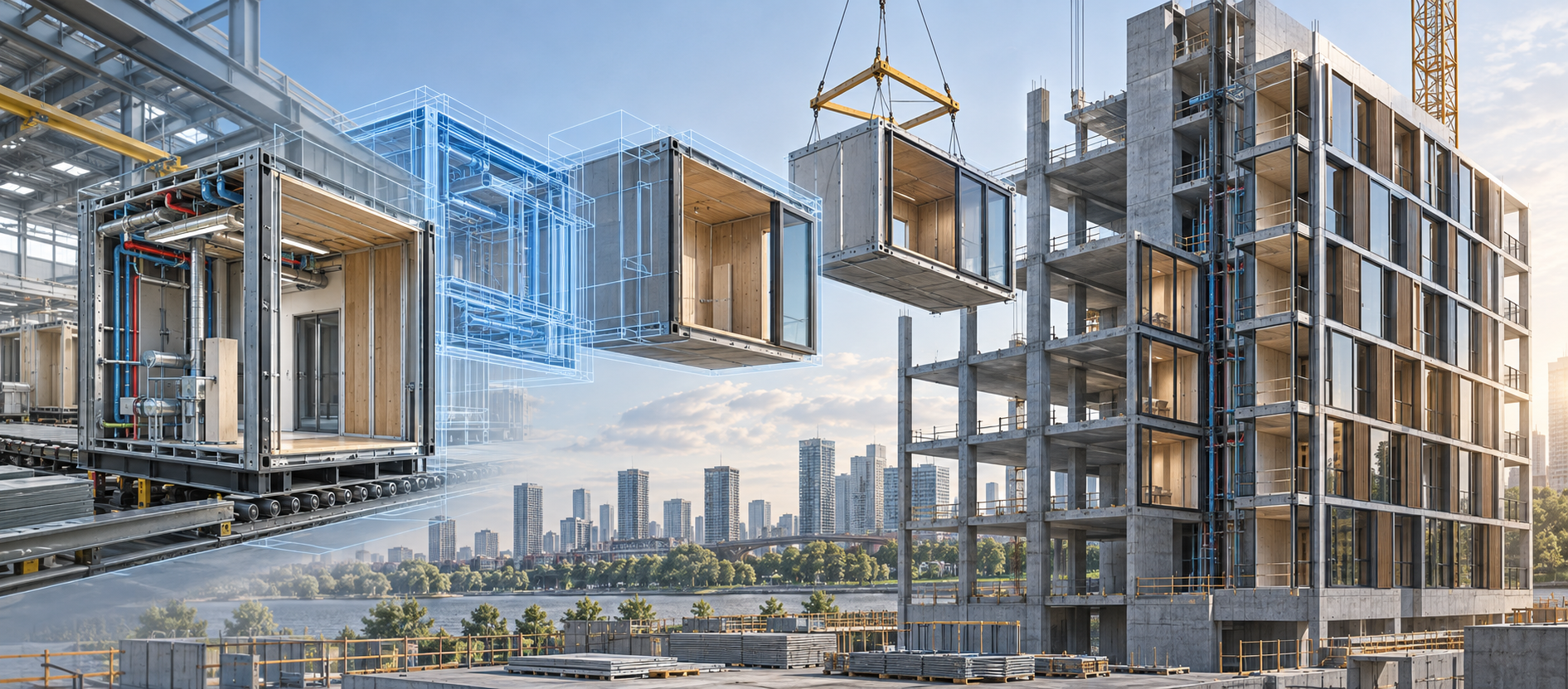
One of the important developments in BIM is the increasing connection between coordination and fabrication. Contractors and fabricators need more than a visually coordinated model. They need accurate dimensions, elevations, clearances, connections, supports, openings, equipment locations, and installation information.
As BIM becomes more closely connected with fabrication and prefabrication workflows, the quality of model information becomes increasingly important. AI and automation can support this transition by helping teams check information completeness, identify inconsistencies, manage model data, and streamline repetitive documentation tasks.
For MEP systems in particular, better-connected workflows can support the progression from coordinated BIM models to shop drawings, spool drawings, fabrication information, and installation planning.
5. Scan-to-BIM Is Becoming More Efficient
Renovation, retrofit, industrial, and existing-building projects often begin with a fundamental challenge: understanding what is actually present on site. Laser scanners and other reality-capture technologies can collect millions of points representing existing physical conditions. Converting that information into a usable BIM model still requires significant technical work. Advances in object recognition and point-cloud processing are helping improve this workflow.
Software can increasingly assist teams in identifying surfaces, structural components, building elements, and patterns within large point-cloud datasets. This can reduce some of the repetitive effort involved in interpreting existing conditions.However, automated recognition does not eliminate the need for experienced Scan-to-BIM professionals. Irregular geometry, concealed elements, incomplete scans, complex MEP systems, and project-specific LOD requirements still require careful interpretation. The real opportunity is using technology to accelerate the process while maintaining professional verification.
6. BIM Models Are Becoming Data Resources
The value of BIM is not limited to geometry. A well-developed model may contain equipment information, classifications, specifications, quantities, materials, asset data, system relationships, and information required during construction and facility operations. This structured information is particularly important for AI. An intelligent system cannot produce reliable analysis from poorly organized or incomplete project data. As a result, successful AI adoption in BIM will depend heavily on information quality.
This places greater importance on consistent parameters, classification systems, naming conventions, data standards, model governance, and interoperability. In other words, the future of AI-powered BIM starts with good BIM practices.
7. Project-Aware Digital Assistants
A particularly interesting development is the emergence of digital assistants that can work with project context. Most people are familiar with general-purpose AI tools that respond to questions. A project-aware assistant is different because it can potentially work within a controlled environment containing models, drawings, documents, schedules, issues, and other project information.
This could change the way professionals search for and interact with project data. Instead of manually reviewing multiple files, a BIM coordinator could potentially ask which issues remain unresolved in a particular area, what changed between model versions, or which elements are missing required information. This direction is still developing, but it points toward a future in which BIM professionals spend less time searching through project information and more time evaluating it.
8. Digital Twins Extend BIM Beyond Construction
Another area gaining momentum is the connection between BIM and digital twins. A BIM model provides a digital representation of an asset and its associated information. A digital twin can extend that environment by connecting the digital representation with operational information from the physical asset. This might include data from sensors, building management systems, equipment records, energy systems, or maintenance platforms.
AI can help analyze this information to identify trends and support decisions related to maintenance, equipment performance, energy use, and facility operations. For owners, this extends the value of BIM beyond design and construction.The quality of the original BIM information remains important. Accurate asset information and structured handover data create a stronger foundation for future digital-twin applications.
9. AI and BIM in Construction Monitoring
BIM is also becoming more closely connected with what happens on site. Drones, photographs, video, laser scanning, and other reality-capture technologies provide increasingly detailed records of construction progress. When this information is connected with BIM, project teams can compare planned conditions with actual site conditions.
Computer vision and automated analysis can assist with reviewing this information, potentially helping teams monitor progress, identify differences, verify installations, and maintain better records of construction. For large projects, where manually reviewing thousands of site images or scans would be impractical, this can provide significant value. The result is a closer connection between the digital model and physical construction.
10. Predictive Project Information
BIM traditionally helps teams understand what has been designed. Connected project platforms can also show what is currently happening. The next development is using project information to identify what may require attention next. When BIM data is combined with schedules, coordination records, field information, cost data, and previous project experience, advanced analytics can help identify potential risks and patterns.
For example, recurring coordination problems in a particular system could signal areas that require additional review before installation begins.This does not mean software will predict construction outcomes with certainty. Instead, it gives project teams another source of information for identifying risk earlier and making better-informed decisions.
The Role of BIM Professionals Is Evolving
As AI becomes part of BIM workflows, the skills required from BIM professionals will also evolve. Strong software knowledge will remain important, but understanding information management, automation, data quality, coordination, constructability, and interdisciplinary workflows will become even more valuable. Professionals will also need to understand where automation is useful and where engineering judgment is necessary. The strongest BIM teams will not be those that automate everything. They will be the teams that know which activities should be automated, which require professional review, and how to maintain quality throughout the process.
What Comes Next?
AI-powered BIM is likely to develop gradually rather than through one major technological change. We can expect greater automation of repetitive BIM activities, smarter model checking, improved point-cloud processing, more efficient coordination, project-aware digital assistants, connected digital twins, and closer links between BIM and construction-site information.
At the same time, project data will become increasingly important. Accurate models, structured information, consistent standards, interoperability, and reliable QA/QC will determine how effectively organizations can use these technologies.
AI does not reduce the importance of BIM expertise. It increases the value of professionals who understand both technology and the practical requirements of design, engineering, fabrication, and construction. For AEC organizations, the opportunity is therefore not simply to adopt AI tools. It is to combine emerging technology with established BIM processes and experienced engineering teams to deliver better coordinated, more reliable, and more useful project information. At Advenser, our approach to AI-Powered BIM Services focuses on exploring how emerging technologies can complement established BIM and engineering workflows—from modeling and multidisciplinary coordination to documentation, reality capture, and digital project delivery.