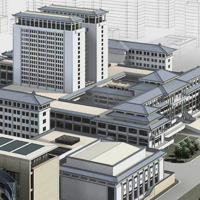
 BIM Services
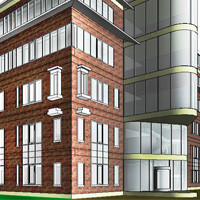 Architectural
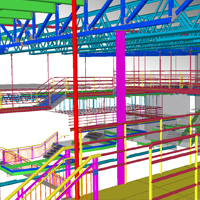 Structural
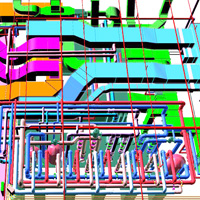 MEP
MEP Facade
 Industrial
Introduction
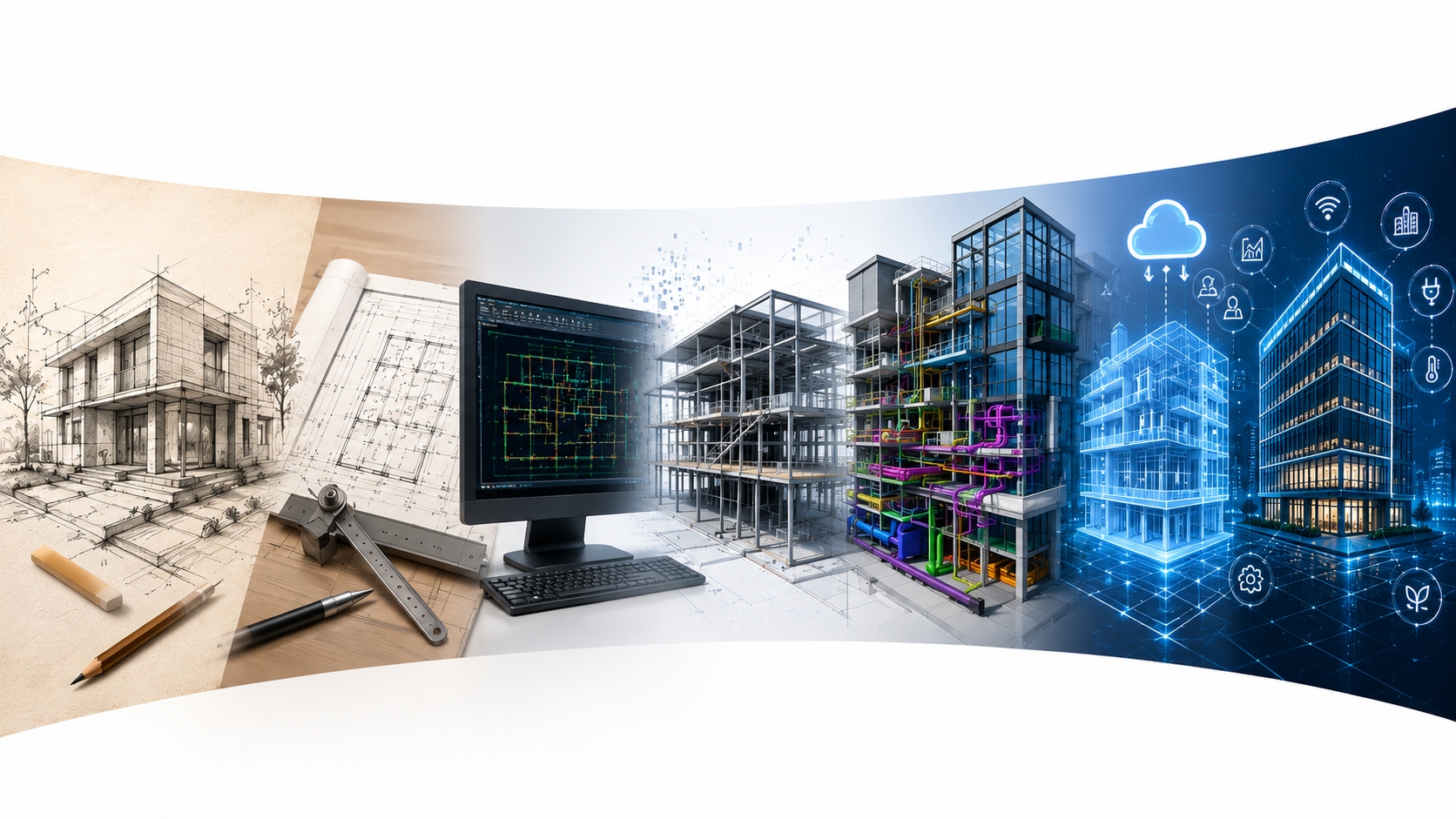
The construction industry is no longer driven only by drawings, schedules, and site execution. Today, successful projects depend on how well teams can visualize, coordinate, analyze, and manage building information before construction begins. This is where Virtual Design and Construction and Building Information Modeling have become essential.
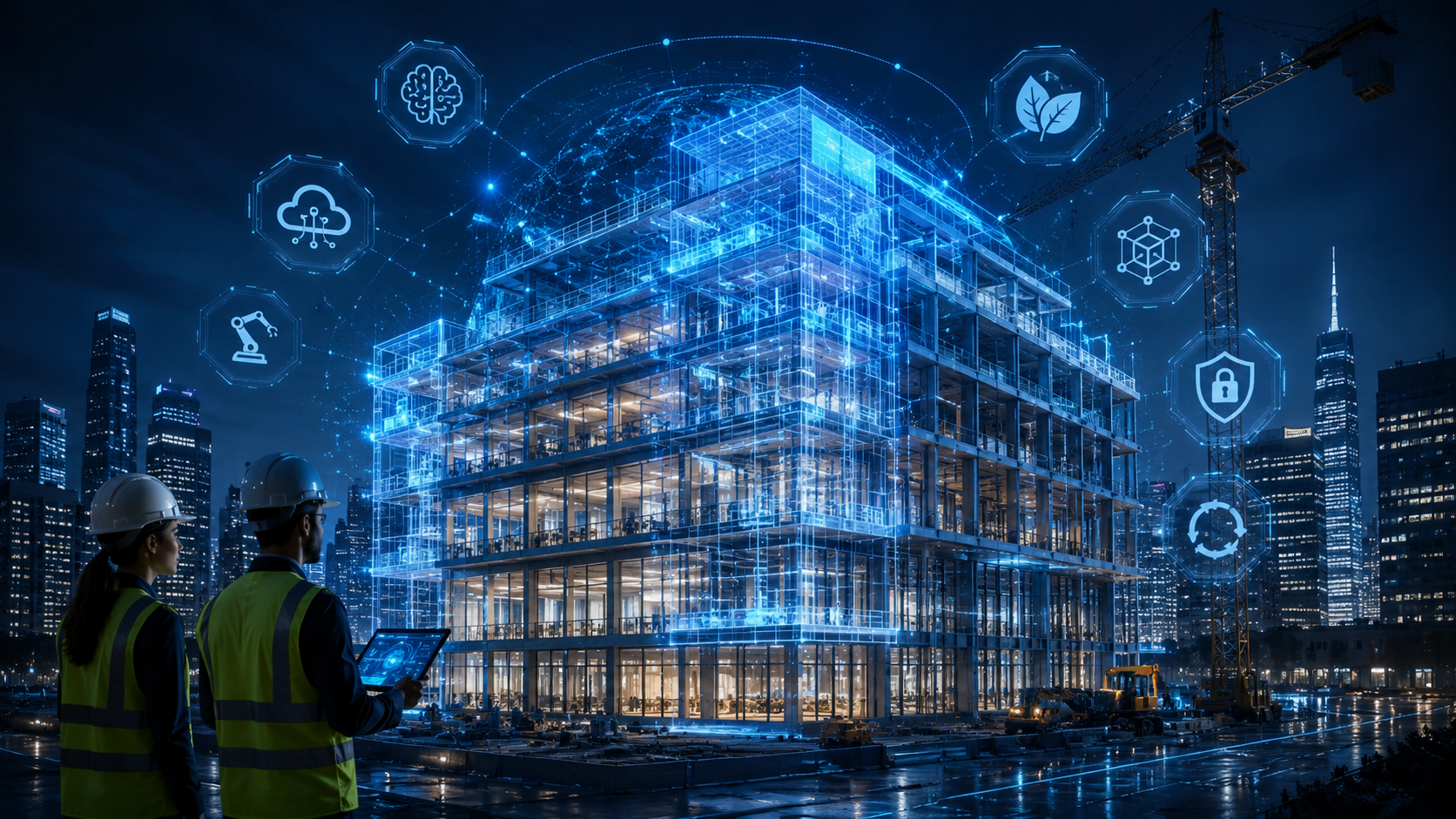
Future-ready VDC/BIM services help project teams move from traditional documentation to intelligent, data-driven workflows. From BIM implementation and consulting to AI, IoT, AR/VR, digital twins, blockchain, and generative design, modern BIM is becoming the digital backbone of construction.
What Makes BIM Future-Ready?
Future-ready BIM is not just about creating a 3D model. It is about building a connected digital process where design, coordination, documentation, cost, schedule, and facility information work together. Industry bodies such as the National Institute of Building Sciences highlight BIM’s role in lifecycle information management and better built-environment delivery.
For owners, contractors, architects, engineers, and specialty contractors, this means fewer coordination gaps, better decision-making, and more predictable project outcomes.
BIM Implementation: Building the Right Digital Foundation
BIM implementation is the first step toward a smarter construction workflow. It involves setting up the right standards, processes, software environment, model structure, naming conventions, coordination methods, and project execution plans.
A strong BIM implementation strategy helps teams answer important questions early:
How should the model be developed?
What level of detail is required?
Who is responsible for each model element?
How will design changes be tracked?
How will the model support coordination, fabrication, and construction documentation?
When BIM is implemented correctly, it creates a single, reliable information source for the project team. This improves communication, reduces rework, and supports better coordination across architectural, structural, MEP, façade, and other building systems.
Virtual Design and Construction: Connecting Design with Buildability
Virtual Design and Construction takes BIM beyond modeling. It focuses on using digital models to plan, coordinate, and improve the actual construction process before work begins on site.
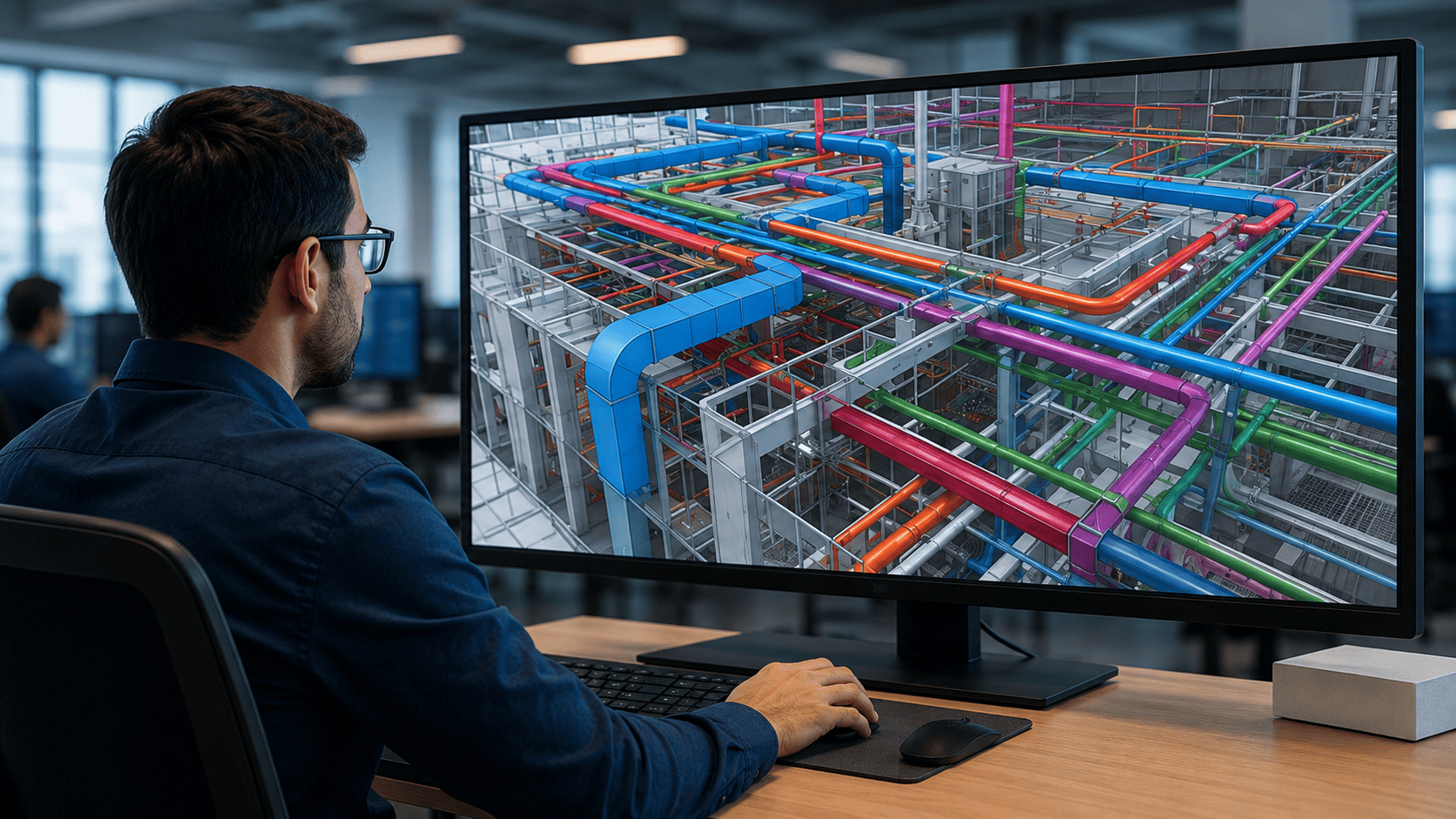
VDC helps teams review constructability, resolve clashes, plan installation sequences, and understand how different disciplines interact within the building. Instead of discovering problems during construction, project teams can identify and solve them virtually.
This is especially valuable for complex projects such as hospitals, airports, data centers, commercial towers, industrial facilities, and infrastructure developments where coordination accuracy is critical.
BIM Consulting: Guiding Projects Toward Smarter Workflows
Many companies want to adopt BIM but are unsure where to begin. BIM consulting helps bridge this gap.
A BIM consultant supports teams with strategy, standards, workflows, software selection, BIM execution plans, model audits, coordination processes, and team training. The goal is not only to use BIM tools, but to use them in a structured and practical way.
Good BIM consulting helps organizations avoid common challenges such as inconsistent model quality, unclear responsibilities, poor coordination workflows, and underused BIM data. It ensures that BIM adoption supports real project goals instead of becoming just another software requirement.
AI in BIM: Making Models More Intelligent
Artificial Intelligence is changing the way BIM models are created, reviewed, and used. AI can support tasks such as automated clash detection, drawing review, design option analysis, data validation, risk identification, and predictive insights. Autodesk notes that AI is increasingly connected with BIM, digital twins, extended reality, and IoT in architecture and construction workflows.
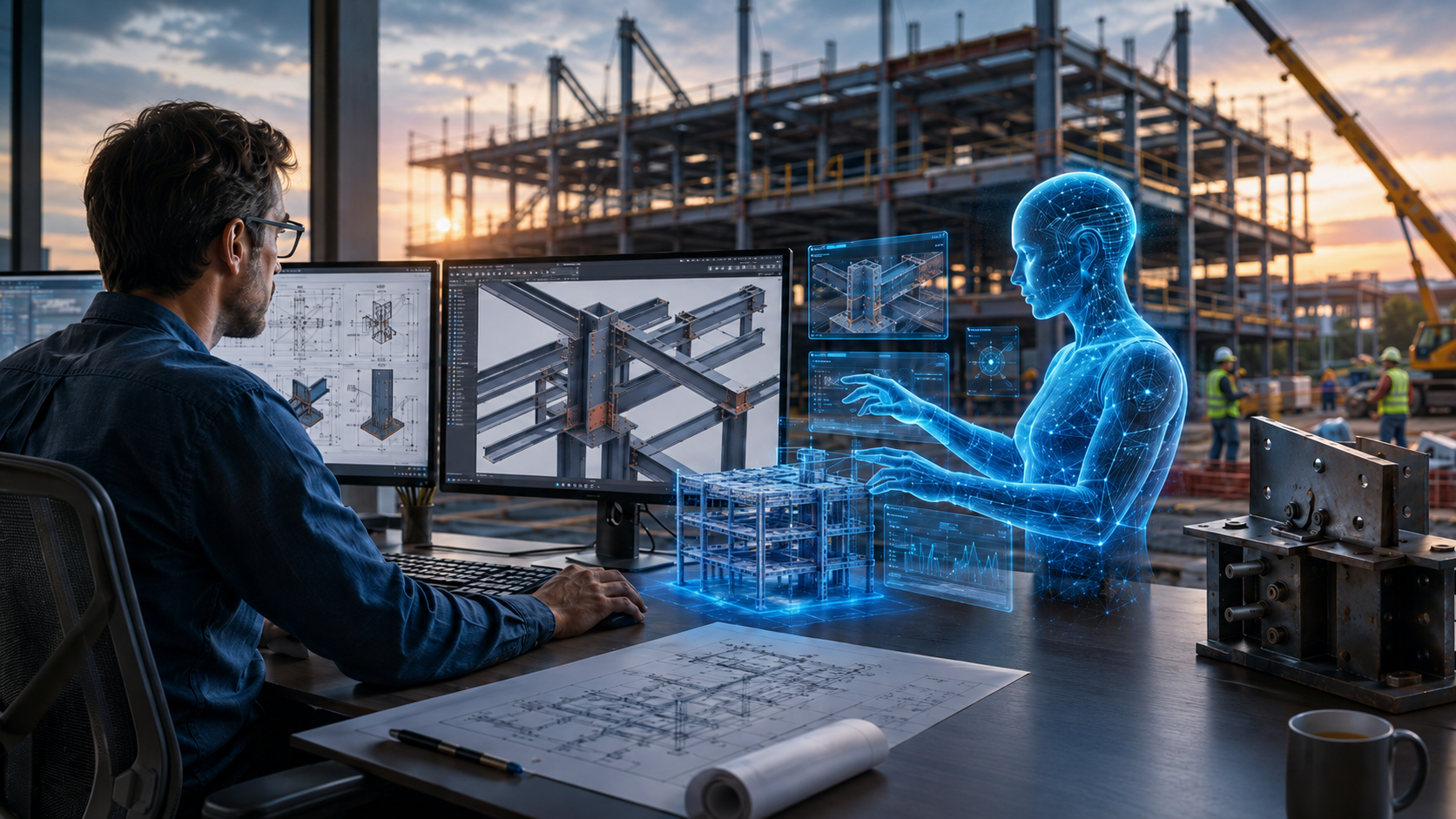
For project teams, this means less time spent on repetitive checking and more time spent on problem-solving. AI-powered BIM workflows can help identify design conflicts faster, highlight missing information, and support better decisions during planning and coordination.
However, AI does not replace BIM professionals. It strengthens their work by helping them process large amounts of project information more efficiently.
Internet of Things (IoT) in BIM: Connecting Models with Real Data
The Internet of Things (IoT) brings live data into the BIM environment. Sensors and connected devices can provide information about temperature, energy use, equipment performance, occupancy, safety conditions, and facility operations.
When IoT data is connected with BIM, the model becomes more useful beyond design and construction. It can support facility monitoring, maintenance planning, asset tracking, and performance analysis.
This is particularly useful for buildings that require continuous operational control, such as healthcare facilities, campuses, manufacturing plants, airports, and data centers.
AR and VR in BIM: Improving Visualization and Review
Augmented Reality and Virtual Reality (AR and VR) make BIM easier to understand for both technical and non-technical stakeholders. Instead of reviewing only drawings or screen-based 3D models, teams can experience the building virtually.
VR allows stakeholders to walk through a digital building before construction. AR can overlay model information onto physical spaces, helping teams compare planned design with actual site conditions. Research on BIM with AR/VR shows strong use cases in design review, construction quality checks, and facility management.
These technologies improve communication, reduce misunderstandings, and help clients, contractors, and consultants make faster decisions.
Digital Twins in BIM: From Static Models to Living Assets
A digital twin is a virtual representation of a physical asset, system, or environment that can evolve using updated information from BIM, sensors, IoT devices, and operational data.
In construction, digital twins take BIM to the next level. While a BIM model supports design and construction coordination, a digital twin can support the full lifecycle of the built asset. It can help owners monitor building performance, plan maintenance, manage assets, and improve long-term operations.
buildingSMART describes digital twins as a living version of a project or asset view that can evolve using real-time data. This makes digital twins valuable for owners who want better control over facility performance after handover.
Blockchain BIM: Improving Trust, Transparency, and Data Security
Blockchain in BIM is still an emerging area, but it has strong potential for improving trust and transparency in project information management.
In large construction projects, many stakeholders contribute data, approvals, changes, and documents. Blockchain can support secure records, version tracking, smart contracts, payment verification, and accountability across the project lifecycle.
For BIM workflows, this can help protect important project data and create a more transparent record of who changed what, when, and why. While blockchain is not required for every project, it can be useful where data ownership, approvals, and contract transparency are critical.
Generative Design in BIM: Exploring Smarter Design Options
Generative design in BIM allows teams to explore multiple design options based on defined goals and constraints. Instead of manually testing one option at a time, designers and engineers can use generative workflows to compare alternatives for space planning, structure, energy performance, material use, cost, and constructability.
Autodesk describes generative design as a way to help practitioners quickly explore, optimize, and make informed decisions for complex design problems.
In BIM, generative design can support better early-stage decisions. It helps teams study “what if” scenarios before finalizing a design, making the process more efficient and more data-driven.
Why These Technologies Matter Together
The real value of future-ready BIM is not in using one technology separately. The value comes when these technologies work together.
BIM provides the project information foundation.
VDC connects the model with construction planning.
AI improves analysis and automation.
IoT connects the model with real-world data.
AR/VR improves visualization and stakeholder understanding.
Digital twins extend BIM into operations.
Blockchain strengthens data trust and transparency.
Generative design improves option analysis and decision-making.
Together, these technologies create a smarter construction ecosystem where projects can be planned, coordinated, built, and managed with greater confidence.
The Human Side of Future-Ready BIM
Even with advanced technology, construction still depends on people. BIM managers, modelers, coordinators, engineers, architects, contractors, and owners all play a key role in making digital workflows successful.
Future-ready BIM is not about replacing human expertise. It is about giving professionals better tools to reduce errors, improve collaboration, and make better decisions. A well-coordinated BIM model can save hours of confusion. A strong VDC process can prevent site delays. A digital twin can help owners manage buildings more intelligently for years after construction.
Technology becomes powerful only when it supports practical project needs.
Conclusion
Future-ready VDC/BIM services are shaping the next generation of construction. As projects become more complex, traditional workflows are no longer enough. The industry needs connected, intelligent, and collaborative digital processes that support every stage of the project lifecycle.
By combining BIM implementation, BIM consulting, VDC, AI, IoT, AR/VR, digital twins, blockchain, and generative design, construction teams can move toward better coordination, improved project visibility, reduced risk, and long-term asset value.
Modern construction is not just about building faster. It is about building smarter, with the right information available at the right time.