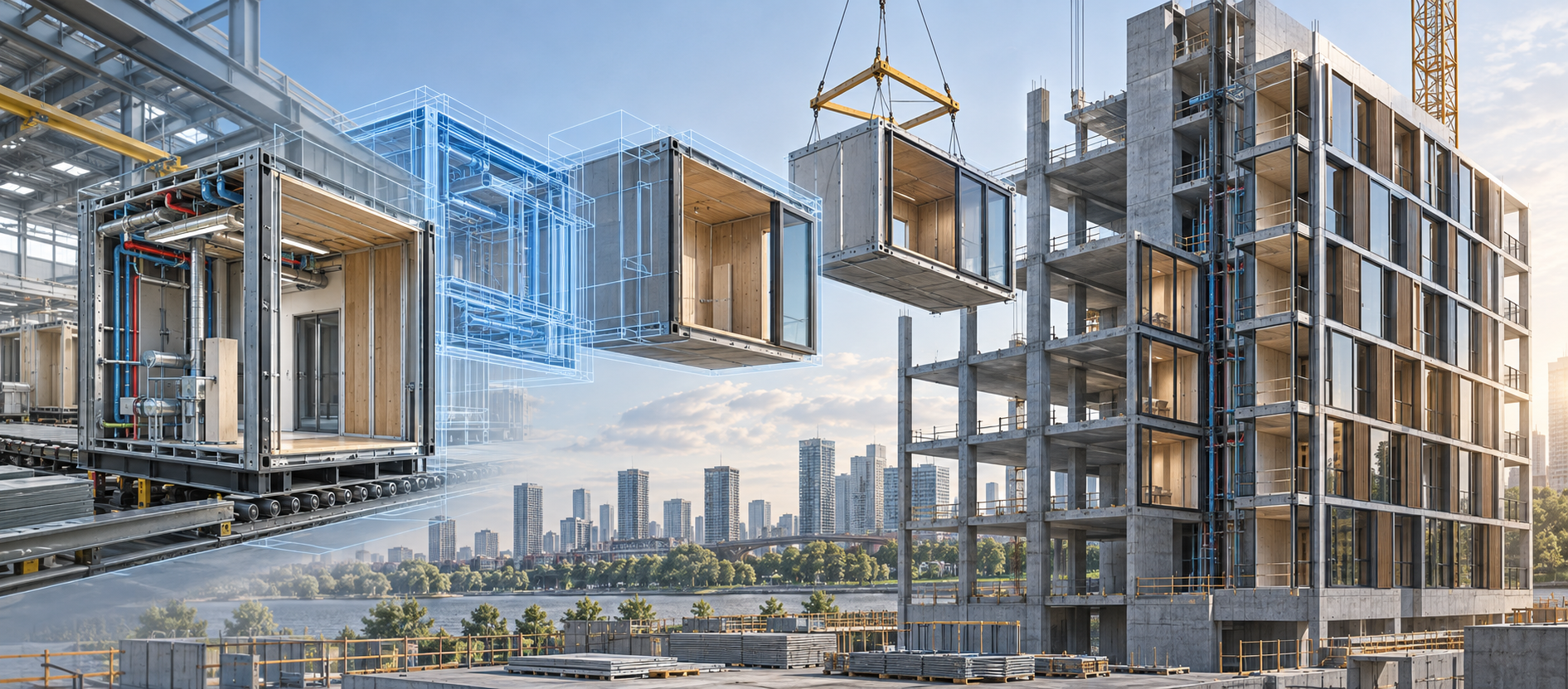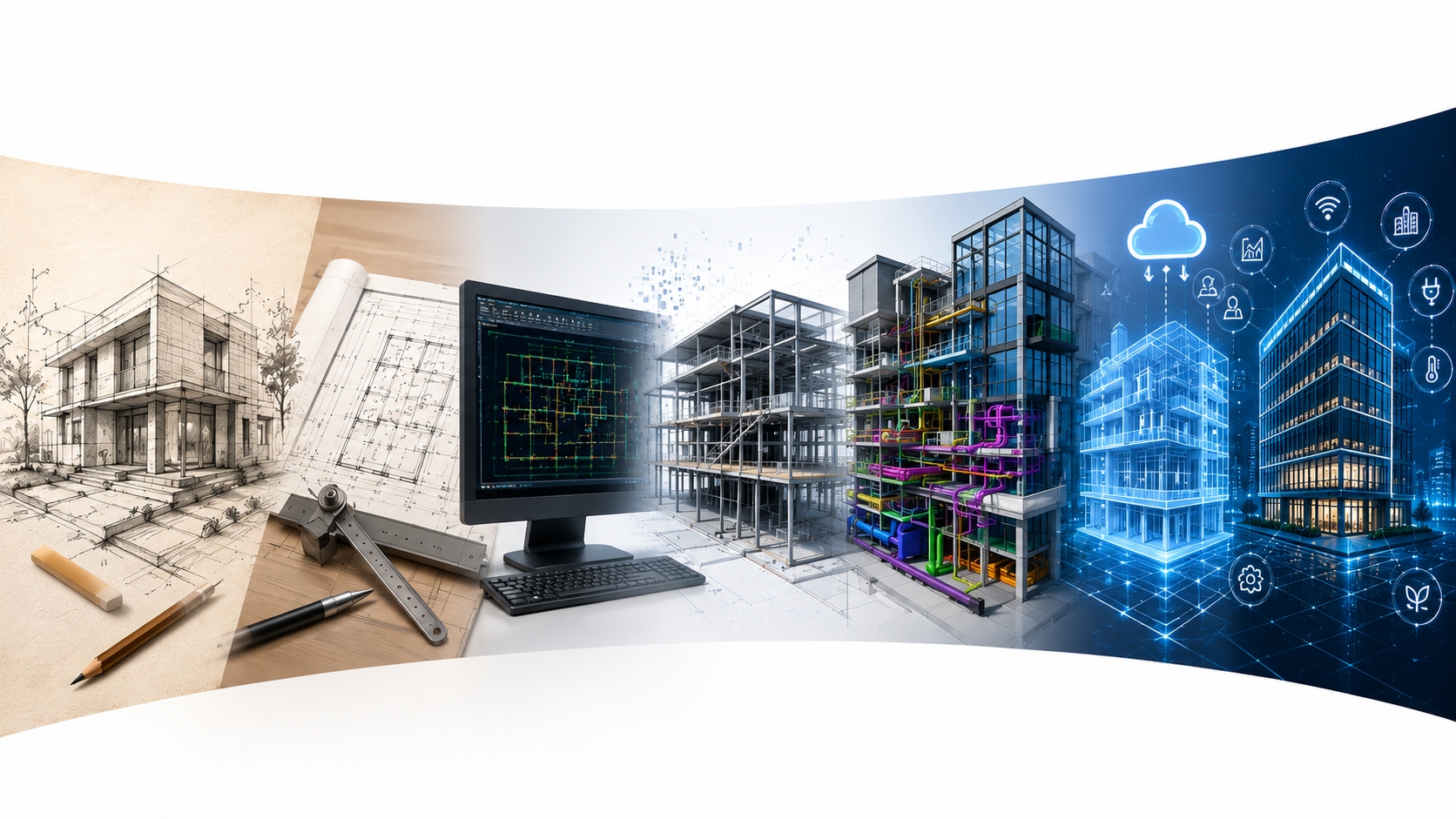
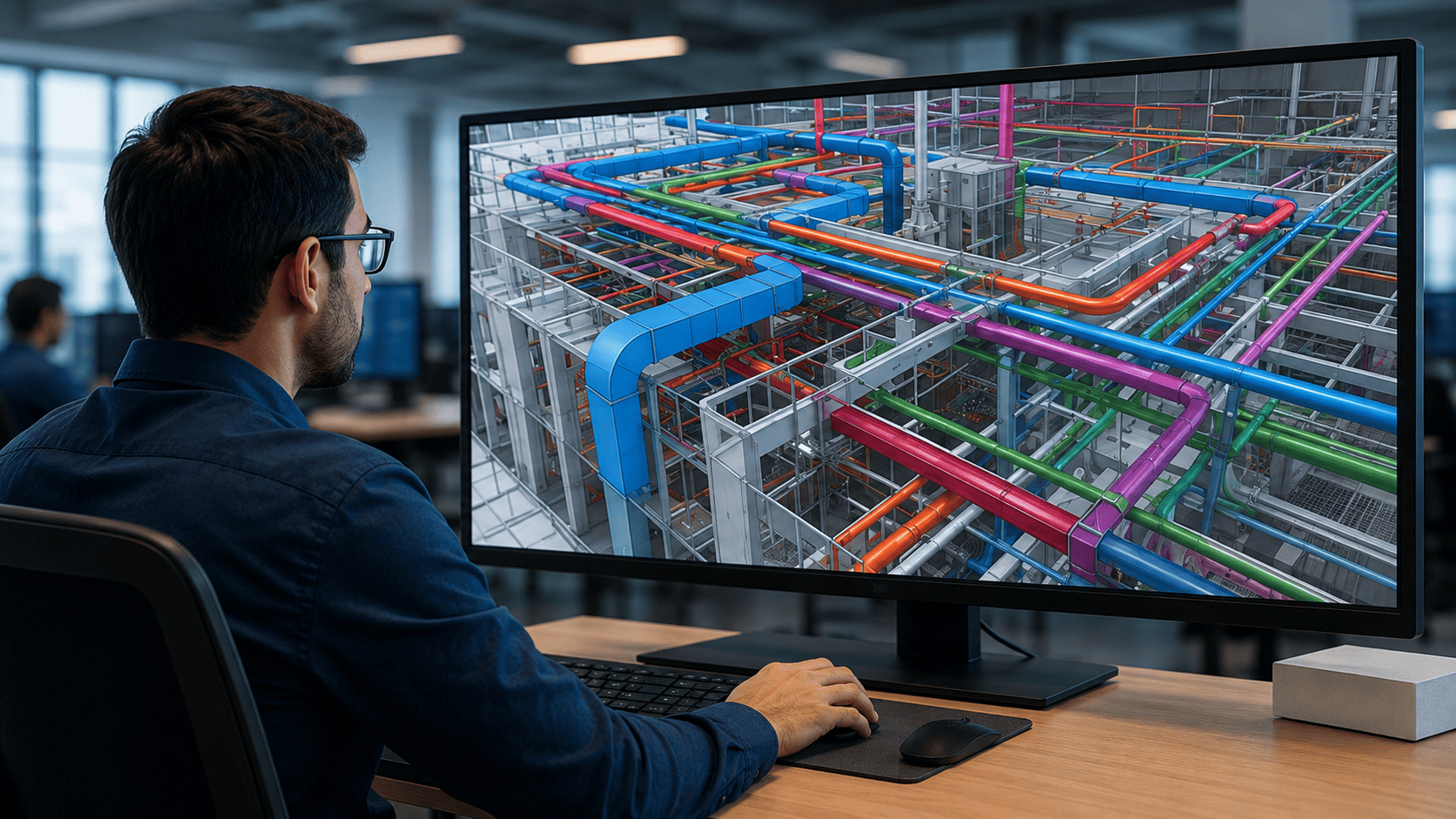
MEPF systems are among the most coordination-intensive parts of any building project. Mechanical, electrical, plumbing, fire protection, architectural, and structural systems must all fit within limited ceiling spaces, shafts, service rooms, and equipment zones. On large commercial, healthcare, industrial, data center, and infrastructure projects, even a small coordination error can lead to site delays, rework, material waste, and installation conflicts.
This is why MEP coordination and clash detection have become core parts of modern BIM services. In 2026, the focus is moving beyond simply finding clashes after models are completed. Leading project teams are now using automation, rule-based model checks, smarter routing support, cloud coordination platforms, and structured BIM workflows to identify risks earlier and produce models that are closer to construction-ready.
For large-scale projects, automation does not replace BIM engineers or MEP coordinators. Instead, it helps them reduce repetitive work, review models faster, prioritize high-impact clashes, and make better decisions during preconstruction.
Why Traditional MEP Modeling Still Creates Coordination Delays
Traditional MEP modeling depends heavily on manual inputs. BIM modelers create duct routes, pipe layouts, cable trays, conduits, equipment connections, sleeves, hangers, and access clearances based on design drawings, specifications, and coordination requirements. While this process is effective when handled by experienced teams, it can become time-consuming when project complexity increases.
The common challenges include repeated design revisions, inconsistent modeling standards, limited ceiling spaces, delayed inputs from other disciplines, and coordination gaps between design intent and actual site conditions. MEP systems are often modeled separately by different teams and later federated into a combined BIM model. This is where clashes become visible.
In many projects, clash detection is still treated as a review activity that happens after modeling. The problem with this approach is that teams may spend several coordination cycles resolving issues that could have been avoided earlier. Large numbers of low-priority clashes can also make it difficult for BIM managers to focus on the conflicts that truly affect constructability.
For companies delivering BIM services at scale, the real challenge is not only detecting clashes. It is maintaining model quality, discipline coordination, and constructability throughout every stage of the MEP BIM services process.
The New Role of Automation in MEP BIM Services
In 2026, automation is becoming a practical layer inside BIM delivery. It is being used to support repetitive checks, improve modeling consistency, and reduce coordination bottlenecks. Instead of manually reviewing every element, BIM teams can use automated processes to check model rules, naming conventions, clearances, system continuity, equipment zones, and clash patterns.
This shift is important for MEP BIM services because MEP models are highly data-driven. Every duct, pipe, valve, cable tray, panel, fixture, and equipment item carries information that affects coordination, scheduling, quantity takeoff, fabrication, and facility management. When model data is structured properly, automation can help teams validate the model more efficiently.
For example, automation can support checks such as:
- Whether ducts and pipes follow approved routing zones
- Whether required maintenance clearance is available around equipment
- Whether sleeves and openings are coordinated with structure
- Whether pipe slopes and service access are maintained
- Whether MEP systems are properly classified and tagged
- Whether unresolved clashes are repeated across multiple floors or zones
This helps BIM teams move from manual checking to a more controlled model review process. It also allows senior coordinators to spend more time on decision-making instead of basic issue sorting.
Automating Standard MEP Modeling Patterns
Many MEP systems follow repeatable design and modeling patterns. These may include typical restroom plumbing layouts, corridor duct runs, riser arrangements, plant room connections, electrical room layouts, medical gas routes, or repeated floor service zones. In large buildings, the same coordination logic may appear across multiple floors or zones.
Automation can help standardize these repeated patterns. Instead of modeling every typical condition from scratch, BIM teams can use predefined rules, templates, families, and modeling standards to speed up production while maintaining consistency.
This is especially useful for projects such as hospitals, airports, hotels, high-rise towers, residential developments, data centers, and industrial facilities, where repeated systems must remain coordinated across large areas.
Standardized MEP modeling patterns can improve the following:
- Model consistency across floors and zones
- Accuracy of repeated service layouts
- Faster coordination between HVAC, electrical, plumbing, and fire protection systems
- Better control over space planning and service clearances
- Reduced rework during shop drawing and fabrication stages
For a large BIM services company, this approach helps improve delivery quality across multiple teams and locations. It also supports better internal QA/QC because modelers and coordinators work from a common set of rules and approved modeling methods.
Smarter MEP Route Planning for Complex Buildings
MEP route planning is one of the most critical areas where automation is adding value. In a traditional workflow, engineers and modelers manually route ducts, pipes, conduits, and cable trays through available spaces while considering structure, architecture, ceiling levels, equipment locations, access zones, and installation sequence.
On complex projects, this becomes a major coordination challenge. A duct may have to pass through a congested ceiling area, avoid structural beams, maintain access space, and still connect properly to equipment. Similarly, plumbing lines must maintain slope, electrical trays require separation, and fire protection systems must meet coverage and code requirements.
Smarter route planning helps teams evaluate better paths before the model reaches the clash detection stage. It can assist in identifying congested zones, comparing route alternatives, and reducing unnecessary system overlaps. This does not remove the need for engineering judgment, but it gives coordinators better visibility before conflicts become major issues.
For MEPF coordination, the goal is not only to find a path that fits in the model. The route must also be practical for installation, maintenance, access, prefabrication, and future facility operations. This is where experienced BIM professionals remain essential.
In 2026, successful MEP BIM services will depend on combining digital tools with strong construction knowledge. The best outcomes come when automation supports experienced BIM coordinators, not when it is used without review.
Moving Clash Detection Earlier in the BIM Workflow
Clash detection has traditionally been seen as a coordination checkpoint. Models are developed, combined, tested, and then reviewed in coordination meetings. However, modern BIM workflows are moving clash detection earlier in the process.
Instead of waiting for a large number of clashes to appear at the end of modeling, teams are now using continuous model checks during design development and preconstruction. This helps identify issues before they become deeply embedded in the model.
This approach is especially important for MEP coordination because not all clashes have the same impact. Some clashes are simple overlaps that can be resolved quickly. Others may affect ceiling heights, equipment access, structural openings, fire-rated areas, installation sequence, or prefabrication planning.
A more advanced clash detection workflow focuses on:
- Hard clashes between physical elements
- Soft clashes involving clearance and access requirements
- Workflow clashes related to installation sequence
- Repeated clashes caused by modeling patterns
- High-priority clashes affecting construction zones
- Clashes that impact fabrication or procurement
By prioritizing clashes based on constructability, BIM teams can reduce unnecessary coordination noise. This helps project stakeholders focus on issues that affect cost, schedule, installation, and site safety.
For large projects, this change is significant. Clash detection is no longer just a model review task. It becomes a continuous quality control process inside the BIM services workflow.
Improving Coordination Across Teams, Trades, and Project Stages
MEP coordination involves many stakeholders, including architects, structural engineers, MEP consultants, general contractors, trade contractors, fabricators, and facility teams. When each team works in isolation, coordination gaps are common. In 2026, cloud-based BIM collaboration and common data environments (CDE) are making coordination more connected.
With centralized model sharing, issue tracking, and version control, teams can coordinate changes more efficiently. BIM managers can assign issues, track resolutions, review model updates, and ensure that everyone is working with the latest information.
This is particularly valuable for companies handling BIM services across different time zones or project locations. A structured coordination platform helps reduce communication gaps and improves accountability.
Automation also supports coordination by grouping similar clashes, identifying repeated problems, and helping teams track unresolved issues. This makes coordination meetings more productive because discussions can focus on decisions rather than basic issue identification.
For MEP BIM services, better coordination means:
- Faster review cycles
- Reduced site conflicts
- More accurate shop drawings
- Better support for prefabrication
- Improved installation planning
- Stronger collaboration between design and construction teams
When MEP coordination is handled properly, the BIM model becomes more than a 3D representation. It becomes a reliable project delivery tool that supports construction planning, trade coordination, quantity validation, and facility handover.
Conclusion
Automation is changing the way MEP coordination and clash detection are managed, but its value depends on how well it is integrated into the BIM workflow. The strongest results come from a balanced approach where digital tools support experienced BIM engineers, coordinators, and construction teams.
For large construction projects, the future of MEP BIM services is not just faster modeling. It is smarter coordination, cleaner data, earlier clash prevention, and more reliable construction-ready models.
In 2026, companies investing in structured BIM services, advanced MEP coordination, and proactive clash detection will be better positioned to reduce rework, improve project certainty, and deliver high-quality outcomes across complex building and infrastructure projects.