 BIM Services
 Architectural
 Structural
 MEP
MEP Facade
 Industrial


Augmented and Virtual Reality Enabled BIM Solutions
The evolution of BIM has opened a new era in design communication, coordination, and decision-making. When enhanced with Augmented Reality (AR), Virtual Reality (VR), and Mixed Reality (MR), BIM transitions from a static 3D environment into an immersive, interactive ecosystem where stakeholders can walk through designs, study spatial relationships, and validate decisions well before construction begins. This integration allows architects, engineers, contractors, and owners to experience the built environment in real scale, real time, and real context, leading to improved clarity, faster approvals, and reduced rework. At Advenser, these immersive technologies are seamlessly incorporated into BIM workflows to enhance design coordination, streamline construction activities, and accelerate project delivery across commercial, industrial, healthcare, and infrastructure sectors.
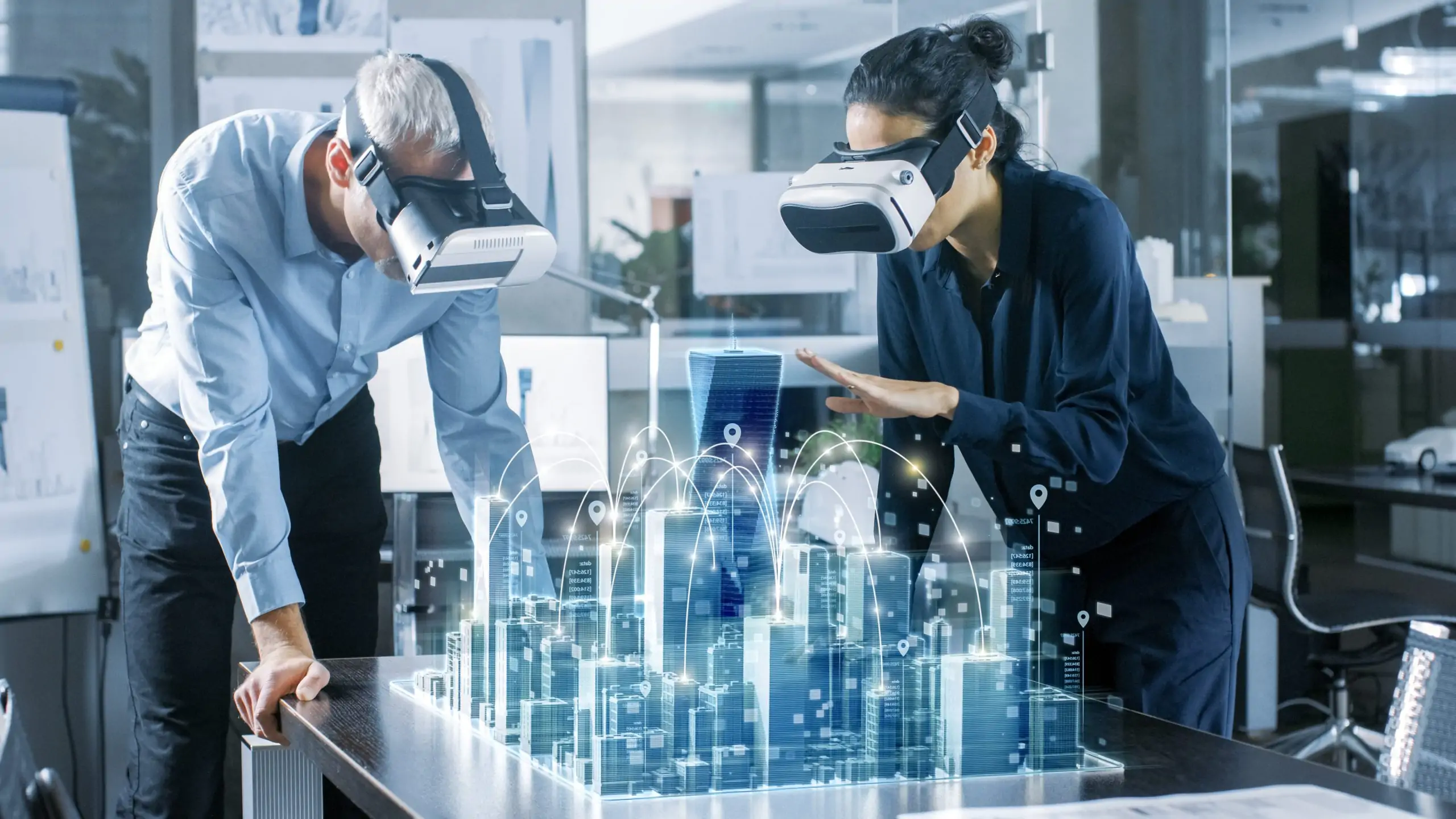
What is MR/AR/VR Enabled BIM?
AR (Augmented Reality)
Overlays BIM models onto physical environments using tablets, mobile devices, or smart glasses, enabling users to view virtual elements within real-world job sites.
VR (Virtual Reality):
Creates an entirely immersive digital environment where stakeholders can walk through BIM models, review spatial layout, and experience the design at full scale.
MR (Mixed Reality):
Blends physical space with digital BIM models in an interactive way—objects respond to user actions, allowing advanced design validation, clash checks, and training simulations.
Together, these technologies extend BIM beyond 3D modeling and documentation, enabling real-time visualization, interactive collaboration, and intelligent decision-making through the full lifecycle of a project.
MR/AR/VR-Integrated Capabilities Within BIM
Integrated 3D BIM Visualization & Virtual Walkthroughs
Integrated 3D visualization allows stakeholders to explore BIM models in full scale using VR headsets. Users can walk through interiors, study spatial layouts, and review design variations with photorealistic clarity. This helps speed up approvals, reduces misunderstandings, and offers a highly accurate preview of the final built environment.
Mixed Reality for Advanced Design Review
MR blends holographic BIM elements with real surroundings, allowing teams to examine geometry, detect clashes, and evaluate system layouts interactively. With tools like HoloLens, users can isolate elements, review section cuts, and collaborate in shared MR sessions, improving design validation and coordination.
AR/VR for Clash Detection & Constructability Analysis
Immersive clash detection enables users to experience problem areas at actual scale, making it easier to evaluate clashes and constructability concerns. AR/VR provides a clearer understanding of system interactions, supporting faster issue resolution and improving coordination outcomes across BIM platforms.
Facilities Management with AR/MR-Enabled BIM
AR and MR bring BIM intelligence to physical assets, allowing facility teams to view equipment data, maintenance history, and hidden MEP systems directly in the field. When integrated with CMMS or digital twins, these technologies streamline operations and support efficient long-term asset management.
AR/VR-Enabled BIM for Digital Twin Integration
Digital twin environments become more intuitive with AR/VR/MR interfaces, enabling real-time visualization of sensor data, equipment performance, and system behavior. This supports predictive maintenance, operational optimization, and smarter decision-making throughout the asset lifecycle.
AR-Based Onsite Construction Visualization
AR overlays BIM models directly onto the physical site, enabling teams to view virtual walls, MEP systems, and structural components in a real-world context. This enhances installation accuracy, supports pre-construction checks, and makes progress tracking more intuitive by aligning digital and physical conditions in real time.
Competitive Advantage
VR creates a shared immersive space where architectural, structural, and MEP teams can analyze the project together. By experiencing the model from within, teams identify conflicts early, understand spatial constraints better, and communicate decisions more effectively than traditional screens or drawings allow.
Competitive Advantage
VR creates a shared immersive space where architectural, structural, and MEP teams can analyze the project together. By experiencing the model from within, teams identify conflicts early, understand spatial constraints better, and communicate decisions more effectively than traditional screens or drawings allow.
Interactive Design Mock-ups & Digital Prototyping
Interactive VR and MR mock-ups allow stakeholders to test layouts, equipment placement, and functional workflows before construction. This helps verify clearances, user movement, and maintenance access, ensuring design decisions are practical and aligned with operational needs.
Check our samples.
Contact us Now.


