 BIM Services
 Architectural
 Structural
 MEP
MEP Facade
 Industrial


Internet of Things (IoT) in BIM
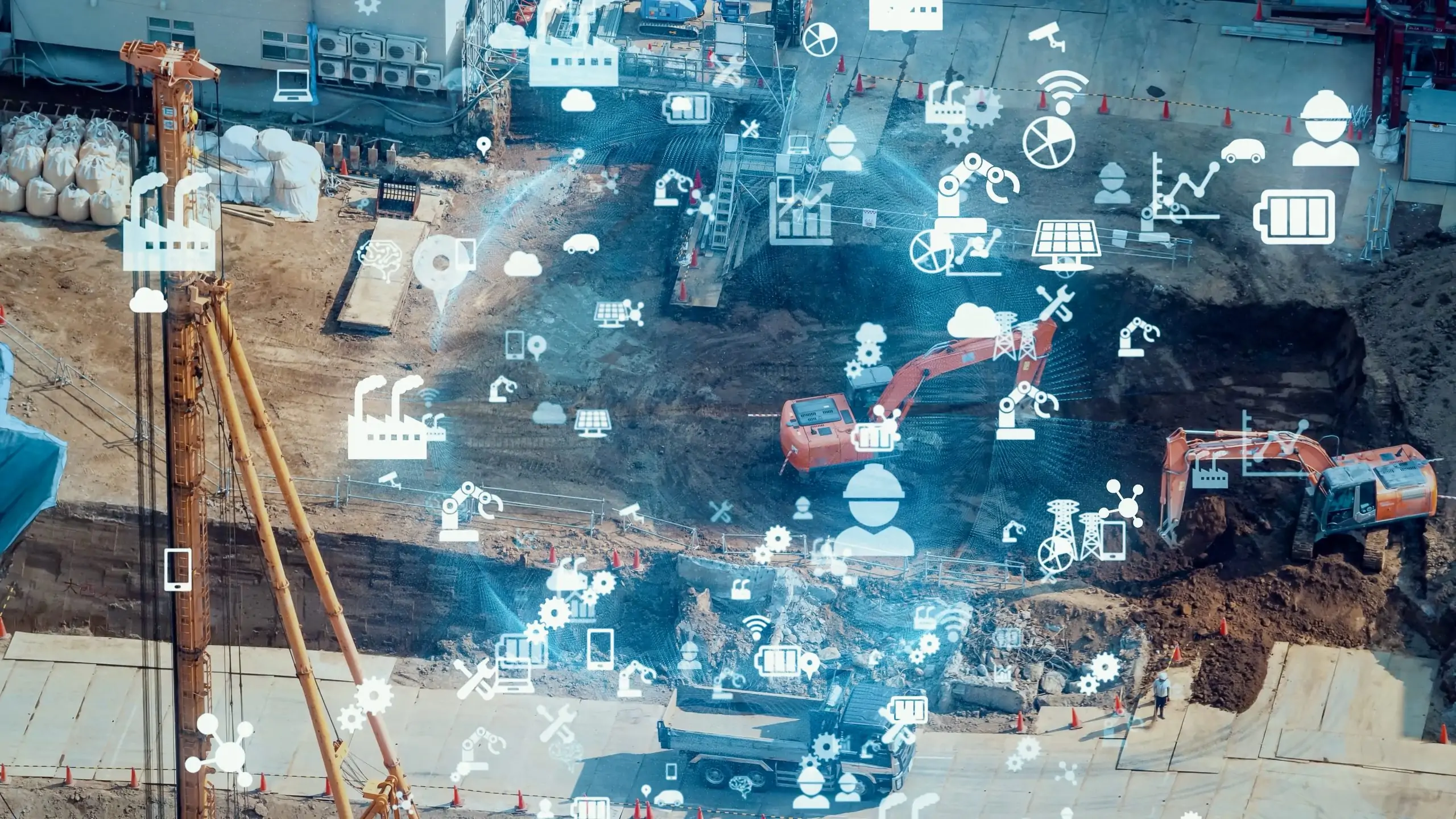
The integration of the Internet of Things (IoT) with Building Information Modeling (BIM) is reshaping how buildings are designed, constructed, monitored, and maintained. IoT-enabled BIM transforms static models into dynamic, data-rich ecosystems that respond to real-time conditions. By linking sensors, equipment, devices, and building systems directly to BIM models, project teams gain immediate access to operational insights that improve decision-making, sustainability, and lifecycle performance.
IoT brings continuous data flow into BIM—capturing temperature, occupancy, energy use, equipment behavior, indoor air quality, and more. This integration enables smarter planning during design, predictive insights during construction, and intelligent automation during operation. When BIM becomes a living digital asset powered by IoT, buildings become safer, more efficient, proactive, and future-ready.
What are IoT-Enabled BIM Services?
IoT-Enabled BIM Services refer to the integration of Internet of Things (IoT) data with Building Information Modeling (BIM) to create a dynamic and information-rich digital representation of a built asset. In this approach, data collected from connected sensors, devices, and building systems is linked to BIM models, allowing them to reflect real-world conditions rather than remaining static design documents.
IoT sensors capture information such as energy consumption, equipment performance, occupancy levels, environmental conditions, and system status. When this data is connected to BIM, it can be visualized within the spatial and system context of the building, helping stakeholders understand how different components interact and perform over time.
By combining BIM’s structured building data with continuous IoT inputs, IoT-enabled BIM supports better insight across design, construction, and facility operations. It provides a foundation for informed decision-making, improved asset management, and the development of intelligent, data-driven built environments.
IoT Integration Capabilities Within BIM
IoT-Driven 3D Modeling & Sensor Mapping
IoT-integrated BIM begins with embedding sensor locations, equipment nodes, wireless systems, and real-time data points within the 3D model. This enriched BIM environment illustrates how building systems will function once operational. By mapping IoT infrastructure directly into BIM, stakeholders can visualize connectivity, optimize placement, and plan installations with precision. This ensures the building is fully prepared to support automation, monitoring, and future technological upgrades.
Real-Time Data Integration With BIM Models
By connecting live IoT data feeds to the BIM environment, buildings become self-reporting systems. Real-time information such as energy consumption, occupancy levels, equipment loads, environmental conditions, and utility usage is displayed within the model. This allows facility teams to visualize operations spatially and respond quickly to anomalies, inefficiencies, or safety conditions. It creates a powerful, intuitive platform for understanding building behavior at every moment.
IoT-Assisted Construction Monitoring & Site Insights
IoT sensors deployed during construction provide continuous updates on temperature, humidity, vibration, material status, worker movement, and equipment usage. When this data feeds into BIM dashboards, teams gain high-quality insights into site productivity, safety risks, and schedule performance. This leads to more accurate tracking, faster issue identification, and reduced delays.
Predictive Maintenance Using IoT Inside BIM
Predictive maintenance becomes far more effective when IoT data is visualized inside BIM. Equipment sensors monitor system health, detect anomalies, and forecast failures before breakdowns occur. BIM contextualizes this information by showing exact equipment locations, access zones, spare part details, and maintenance history. Facility teams can plan interventions proactively, reduce downtime, and extend asset life.
IoT-Enhanced Energy Modeling & Environmental Optimization
IoT sensors continuously capture energy usage patterns, HVAC loads, lighting use, and indoor climate conditions. By integrating this data into BIM, designers and operators gain powerful insights into building performance. AI-ready analytics support decisions that lower energy consumption, improve occupant comfort, and optimize system efficiency. The result is a more sustainable and cost-efficient building throughout its lifecycle.
Smart Occupancy & Space Utilization Management
IoT data enables intelligent space planning by monitoring occupancy trends, movement flow, and room usage patterns. When visualized through BIM, these insights help owners optimize layouts, adjust workspace allocations, and enhance user comfort. This is especially valuable for commercial buildings, campuses, healthcare facilities, and smart workplaces aiming to maximize efficiency.
IoT-Integrated Safety & Security Monitoring
Safety systems connected to IoT—such as fire alarms, access control, CCTV, smoke sensors, emergency lighting, and environmental monitors—can be displayed within BIM models for immediate spatial context. In emergencies, facility teams can identify risk zones, track movement patterns, and coordinate response efforts more effectively. IoT-enabled BIM significantly strengthens building safety and incident preparedness.
Digital Twin Development With IoT Connectivity
IoT is the backbone of any high-performance digital twin. Real-time sensor data feeds continuously into the BIM-based twin, allowing operators to simulate scenarios, monitor performance, and automate facility management workflows. IoT-powered digital twins support predictive analytics, operational optimization, and smarter asset lifecycle decisions through an always-accurate virtual replica of the building.
Check our samples.
Contact us Now.


