BIM Services
 Architectural
 Structural
 MEP
MEP Facade
 Industrial
Precast Detailing Case Study – Metro Station Project, Australia
Successfully completed the BAPS Temple project using Tekla, which involved detailing both solid and double walls for an architecturally unique structure.

Successfully completed the BAPS Temple project using Tekla, which involved detailing both solid and double walls for an architecturally unique structure.

Successfully completed the BAPS Temple project using Tekla, which involved detailing both solid and double walls for an architecturally unique structure.

The double-wall project presented significant challenges, including input ambiguities, and coordination issues between disciplines. Modeling required precise representation of connections, reinforcement integration, and clash resolution, while detailing focused on accurate joint design, embedded elements, and tolerance adherence.
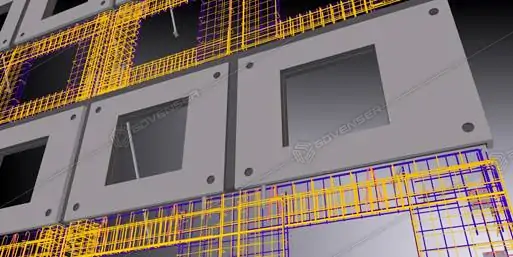
A total of 1,003 precast members were used for the entire project. The building also had lower level basements and shear walls with varying levels. Coordination of panels with respect to these elevated slabs presented a challenge but placement of slabs using Tekla eliminated most of the errors and coordination issues that would have otherwise arisen in the situation. Though the building created an impression that all levels were identical, in reality there was a panel design variation in each level of the building. This challenge was easily met with the help of Tekla’s advanced tools.

We have attended precast detailing for heavy girders which included 435 nos. It’s slope and design changes are challenges in this job. But we can manage it well by using advanced Tekla structure.

The project had a Factory & warehouse building with steel structure having façade covered with Precast wall panels 200 mm thick.

Hing Loong Apartment is a high rise building with RCC, have façade covered with precast wall panels 175mm thick. These precast wall panels were designed and detailed using Tekla software, providing accurate and detailed information for construction.

We created a sample for a particular level and had shown client for general comments. After getting the feedback we started creating other sheets. We used color in the drawings for identifying elements, elevations and footings in our output, which helped client in quick segregation.

Our task was to model and detail 300 wall panels using Tekla Structures software for an industrial building. The panels are 150 mm thick, and various types are included in the project such as solid panels, lintel panels, blade panels, finger panels, and retaining walls with precast slabs.